Oil Paint
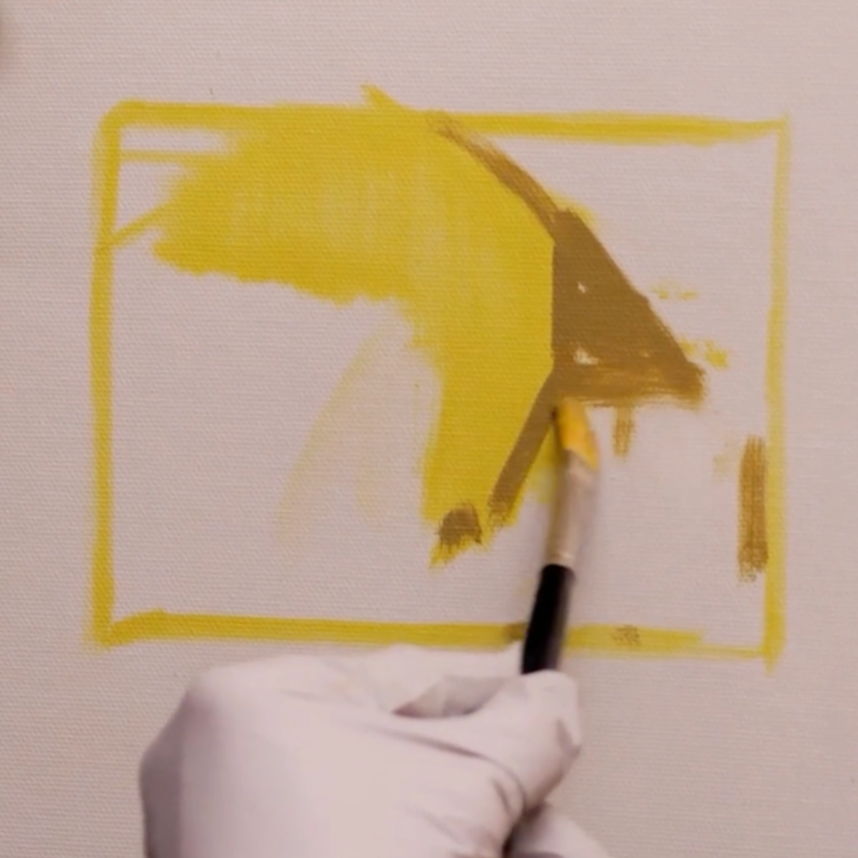
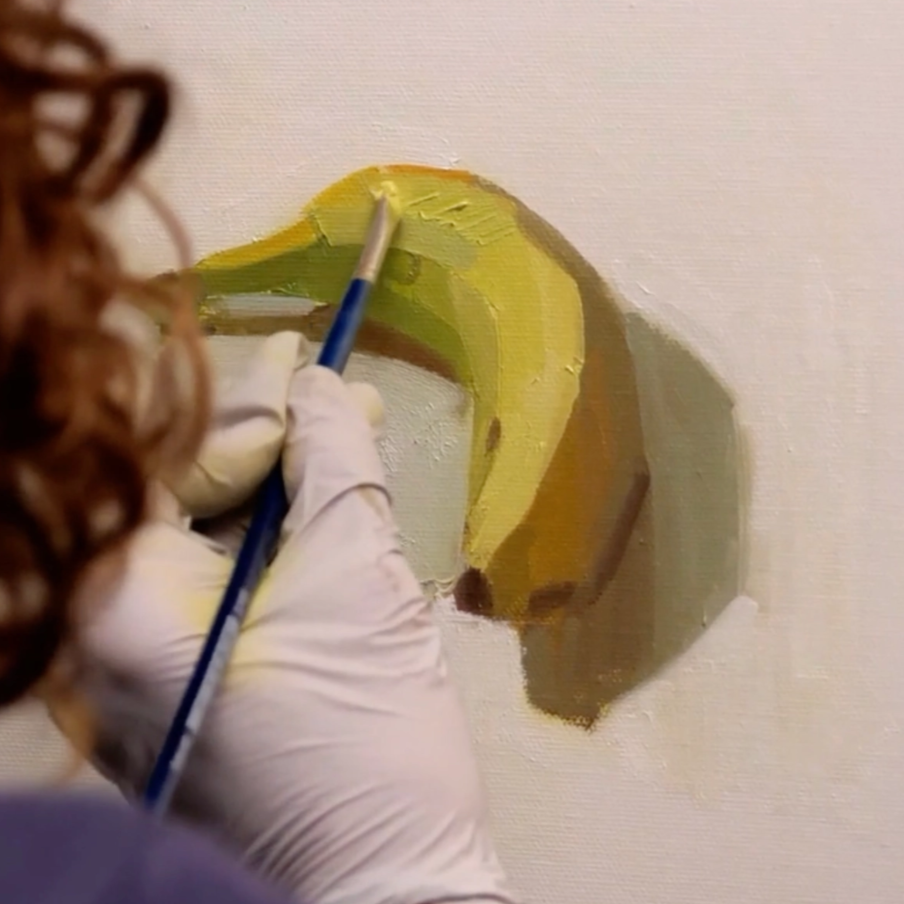
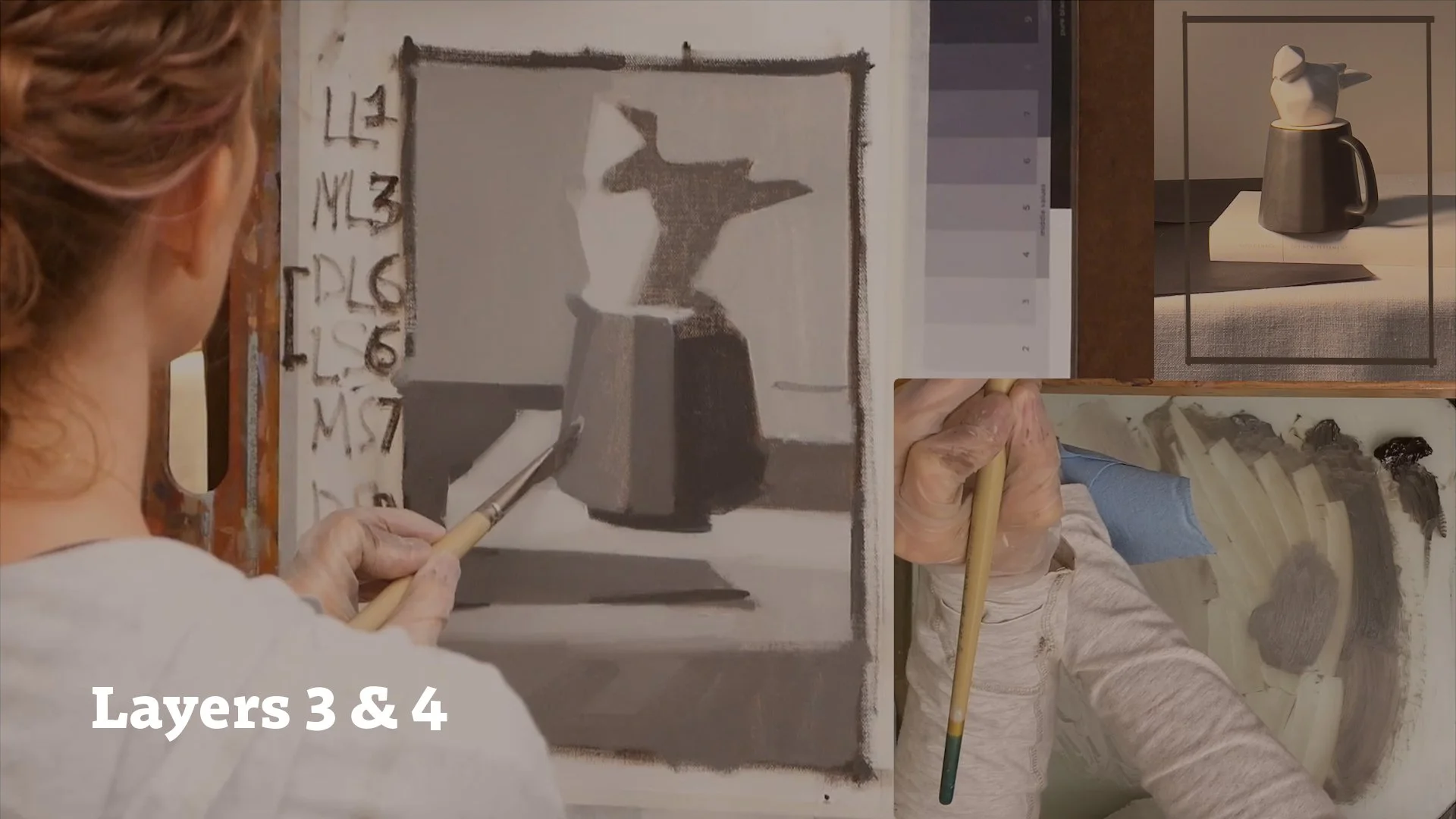
In this video, I cover the paints I recommend and why a few good primaries are all you need.
About Oil Paint
Oil paint is a slow-drying paint that consists of pigment particles suspended in drying oil to create a tough, colored surface. Professional grade paint contains a higher and purer pigment load than student grade — the colors are brighter and more consistent. They're more expensive, but better to work with.
Recommended Brands
I recommend the [Gamblin] and [M. Graham] professional paints, even for beginners. They are a really good value for the price. Not the cheapest, but far from the most expensive, and the paint is very high quality.
Why three primaries only?
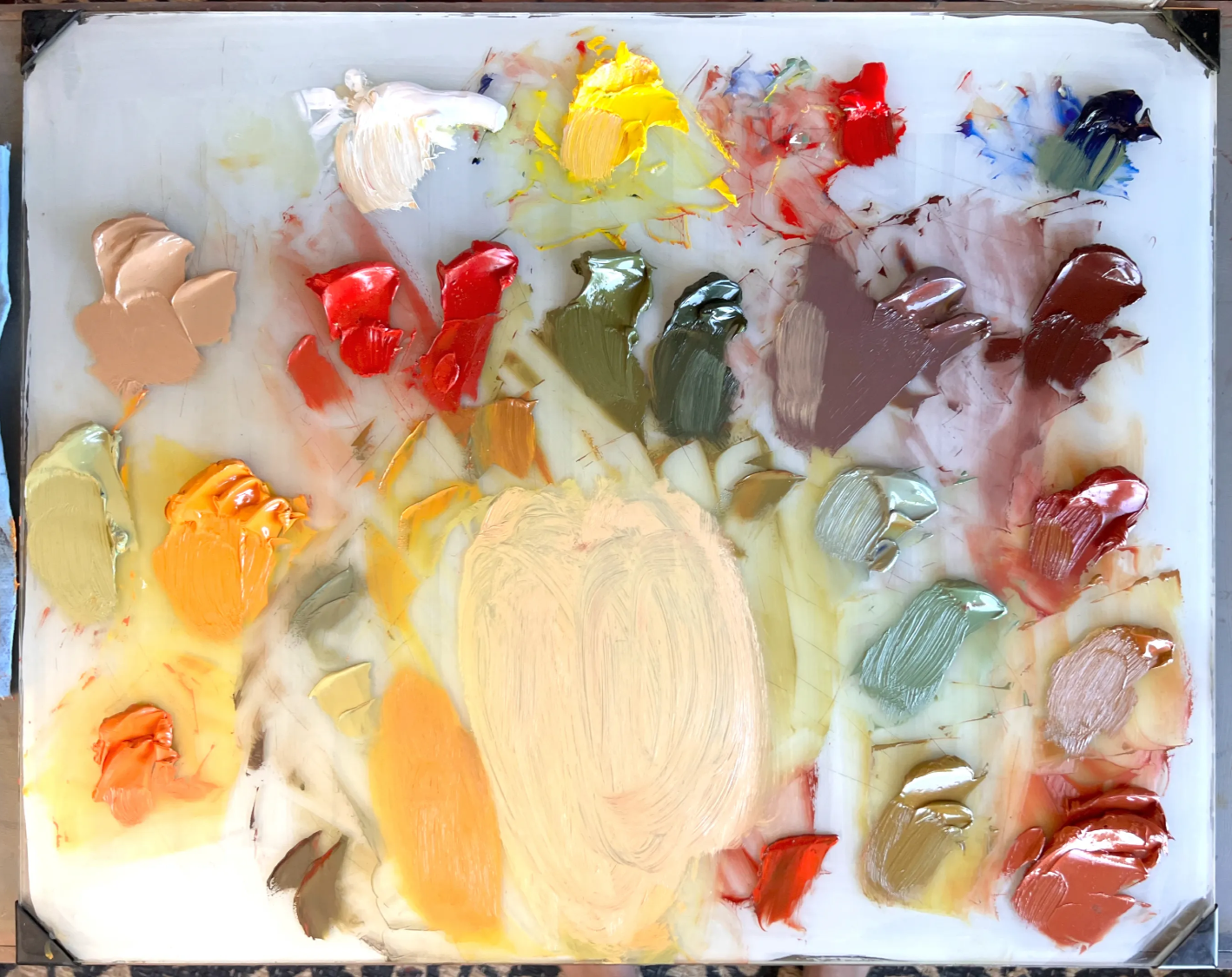
You can paint anything with three primaries + white — and you can mix color well enough to create images that have beautiful color harmony.
When you get started with painting, you're going to want to buy every color under the sun in a tube because you'll think it's a lot easier. I promise you that you're going to feel more in control at first, but then you’ll be more overwhelmed with all those different colored paints out on your palette. On top of that, you’ll have a hard time learning how color works. So keep it simple: one red, one yellow, one blue, and one white.
Why Burnt Sienna?
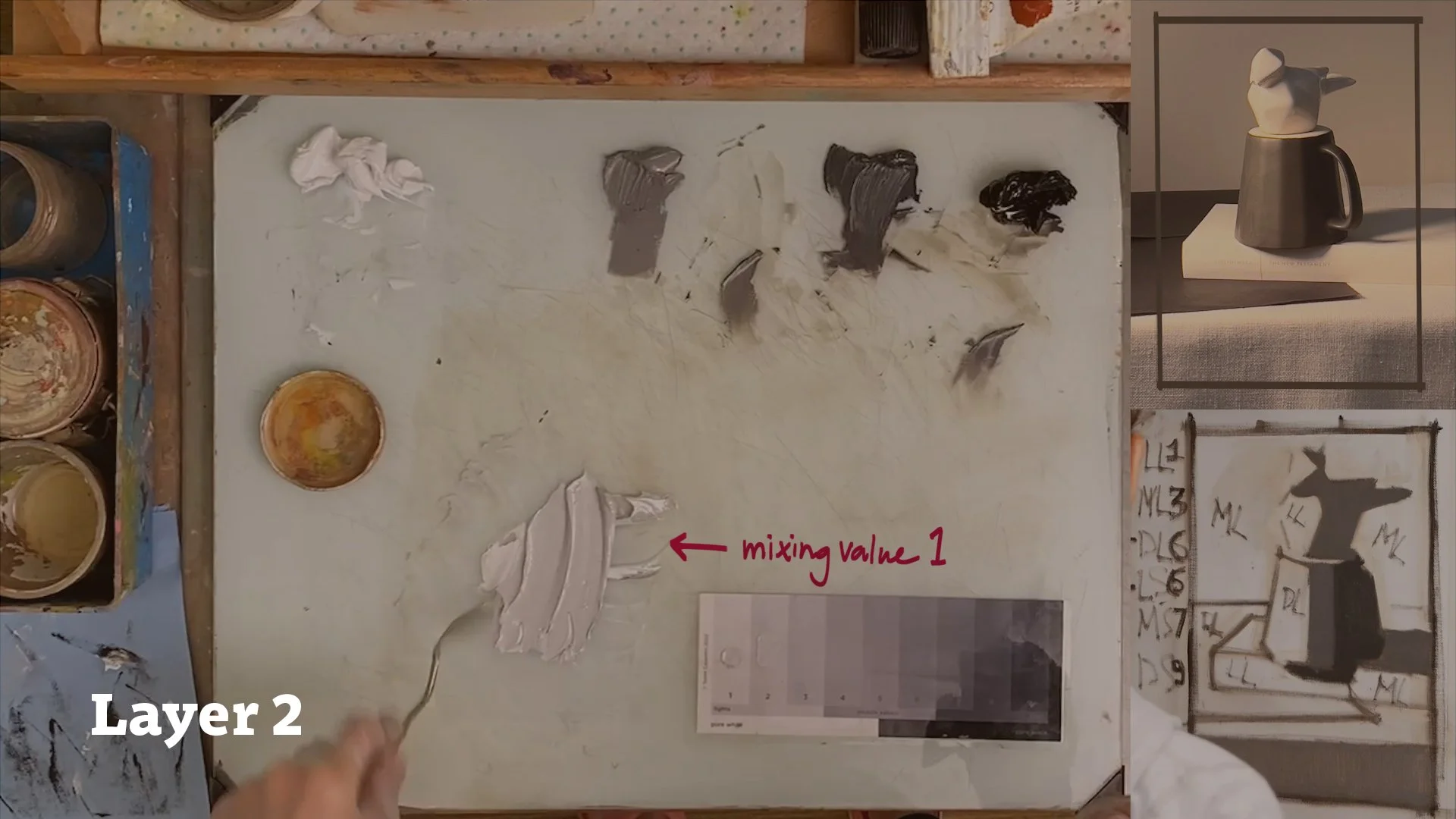
Burnt sienna mixed with ultramarine blue creates a really dark, beautiful neutral paint. It’s a really fast and easy way to mix black and white paint — which is what you’ll use before you paint anything in color.
Are Oil Paints Toxic?
Some paint colors contain heavy metals that are toxic if they enter our bodies in large amounts. The only paint that contains heavy metals on my list is Cadmium Lemon, by Gamblin. The cadmium pigment that Gamblin uses is insoluble to our skin and digestive system, so they claim it's completely safe to paint with (and supposedly safe to eat too, but I don't recommend that!). You'll notice it doesn't have a warning label, while other brands with cadmium pigments do. This is why I choose Gamblin for all of my heavy metal paints.
If you don't want to take any chances, Winsor & Newton creates Cadmium-Free Lemon and Cadmium-Free Red. I’ve never tried them, but they should have the same working properties as their cadmium counterparts.
Mediums
In this video, I explain the two mediums you actually need and how lean and fat work together.
About Mediums
Mediums change the consistency of your paint and make it more workable. You don't need more than two mediums: a "lean" medium (solvent-based) and a "fat" medium (oil-based). That's it.
Fat Over Lean
There's a concept in oil painting called fat over lean. It just means your earlier oil paint layers should be thin and lean. Then as you build up your layers and get closer to a finished piece, you transition to a medium that's fat. There’s actual chemistry involved in this, so it’s good to follow, but don’t worry about the science-y details. Just generally follow the rule, and you’ll be fine.
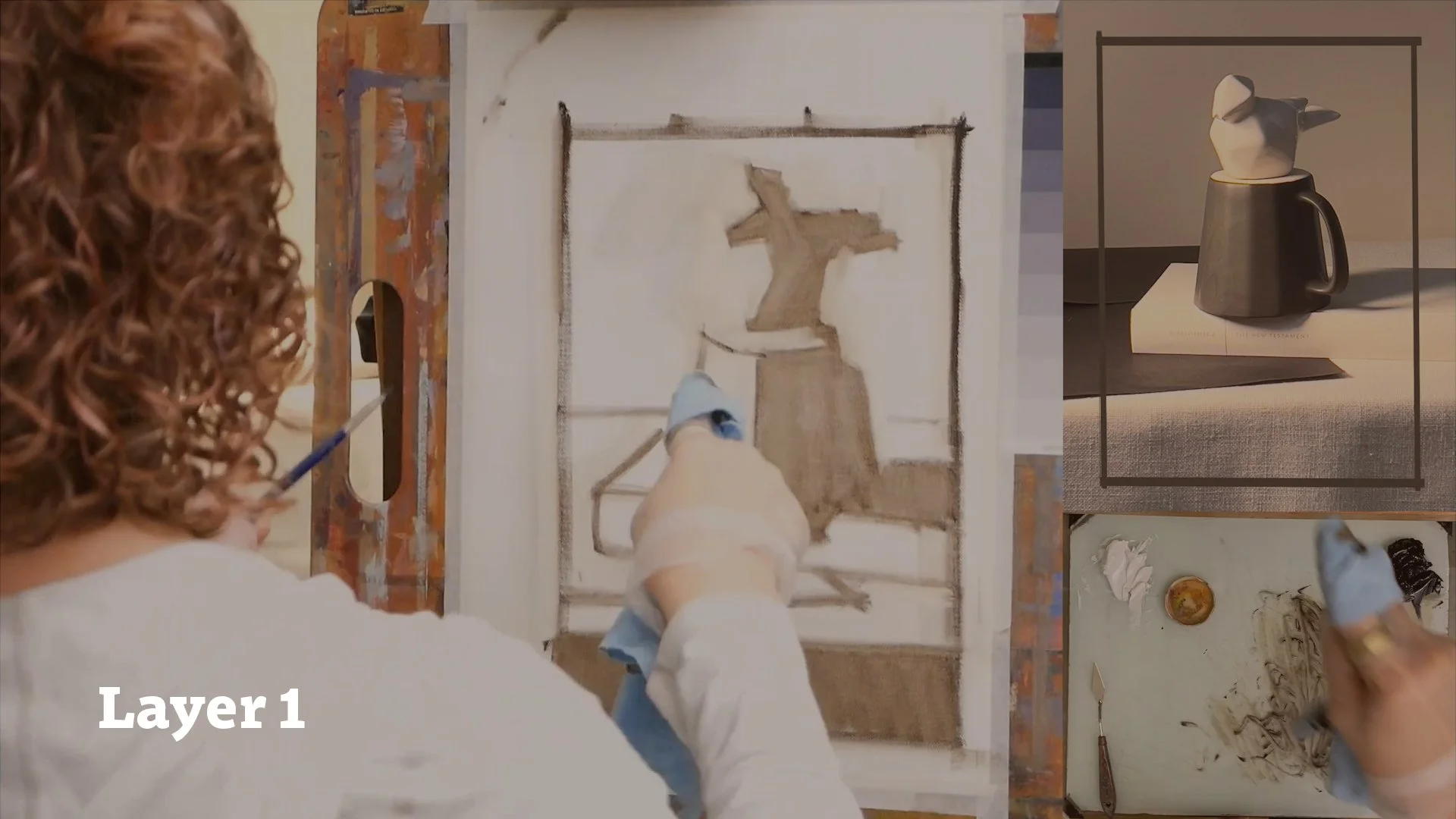
Use a lean, solvent-based medium for your early paint layers. It dries more quickly and keeps the paint thin. It's good for toning your canvas with a wash of color before painting, drawing your underpainting, and massing in big, thin areas of color. You can use straight clean Gamsol, or a blend of Gamsol and oil (about 1:1 ratio).
Use your fat medium (literally made of fat) for your top, thicker layers. It's much more slow-drying than solvent, helps loosen the paint up, and gives it a buttery consistency. It helps the paint lay down on top of the thinner paint below, and it's what makes the paint film stable and long-lasting.
I prefer [safflower] and [walnut] oil for alla prima painting because they're the slowest-drying oils. They keep the paint wet longer, so you can work through a painting across several days if you need to.
Note: Don’t ever get your oil medium from the grocery store, as it will not work properly with oil paint.
Are Mediums Toxic?
Gamsol is the industry standard, low-odor solvent. It is the least toxic solvent on the market that is low odor that I’m aware of. That said — it isn’t non-toxic and some people are sensitive to it.
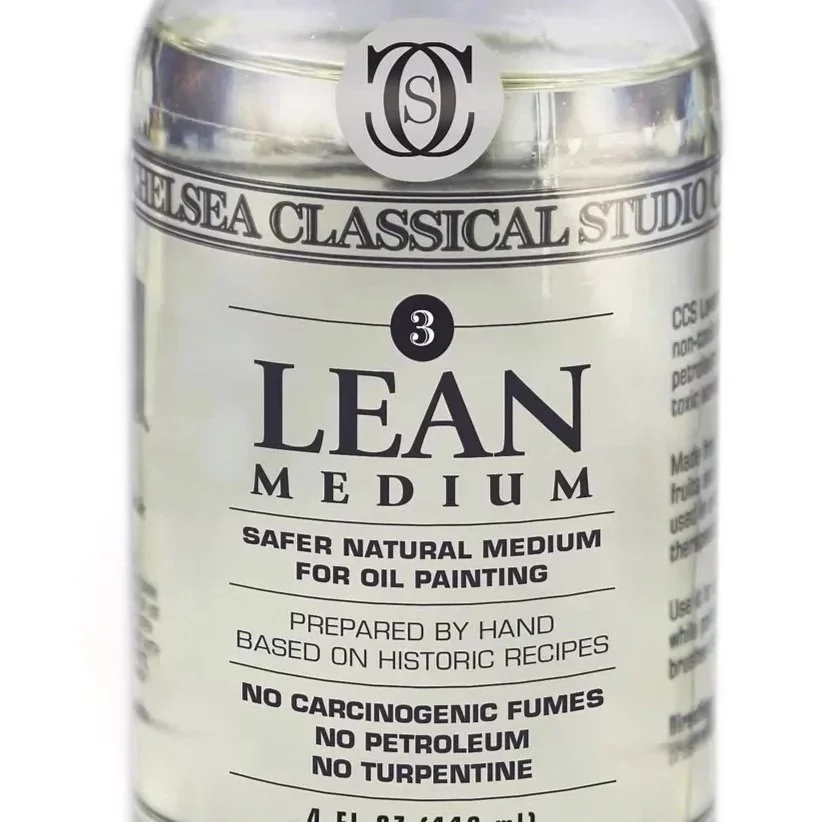
When you’re using it, you want to have good ventilation in your space. If you want a non-toxic alternative, lavender spike oil works, and Chelsea Classical Studio’s Lean Medium is what I use in lieu of Gamsol. Water-mixable oils are a fallback if solvents are a hard no.
Learn more about Gamsol and Chelsea Classical Studio’s Lean Medium by clicking the image links.
Brushes
In this video, I show you the brushes I reach for and what to look for in a good one.
About Brushes
There are so many brushes out there, it can be overwhelming. But it's really important to get the right brushes — they make a huge impact on your painting experience. If I could splurge on only one supply category, it would be brushes!
Note that brushes can easily take a beating, and will probably need to be replaced frequently depending on how often you paint and how you care for them. See my Cleaning Supplies video (below) for tips on keeping your brushes in good shape.
Hog Bristle vs Synthetic
Hog bristle brushes are made from the hair of boars and are best used with oil paint. The bristles are thick, coarse, and have good spring. They can pick up a lot of paint and move it around efficiently on the canvas. They are workhorse brushes and very beginner-friendly. They also create that classic textured, brush-stroke-look. I mostly use hog bristles and recommend beginner oil painters use them as well.
Synthetic bristle brushes are made of polyester and/or nylon. The bristles are smooth and have a range of spring depending on the type. They can be used for water or oil-based paint and create a smooth texture to the brushstrokes. They are oftentimes really pretty, so you might be compelled to buy them, but they generally aren’t as efficient or easy to work with as hogs.
I only use and recommend one synthetic brush, and that is my size 2 bright from Silver Brush Bristlon. I love this brush for getting into the details, but maintaining loose brush work. I use it in my later layers and smallest details, when I want more precision.
Left: Hogs Right: Sythetics
Sizes and Shapes
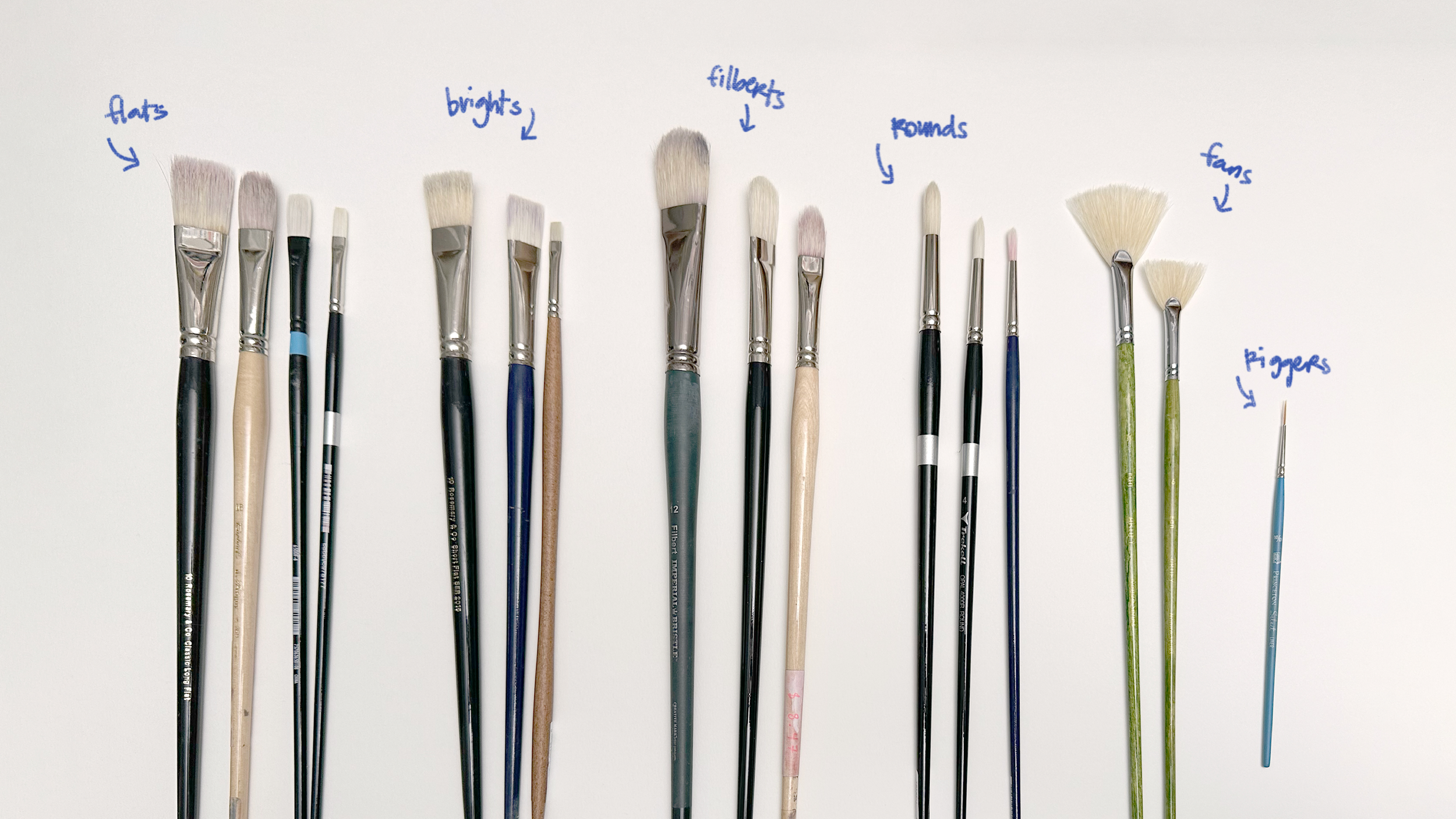
Brushes come in a range of sizes from 0 (small) to sizes in the 20s (big). Sizes 2-12 are commonly used for oil painting on a small to midsize canvas and I use them all.
They also come in many shapes. Some common ones used for oil painting are flats, filberts, brights, rounds, and riggers (or liners). I exclusively use and recommend flats and filberts for beginner oil painters.
Brands
I love the [Raphael D'artigny line of brushes], but they can be hard to find. The [Robert Simmons Signet brushes] are a good alternative, but a bit pricey. If you need a less expensive option for your hogs, get [long-handle flats or filberts by Imperial Bristle]. I don't love them as much as the others, but they're a good budget alternative.
Brush Handle Lengths
When you're painting with oil, the brush is an extension of your arm — so you need it to be long. If you use a short brush, you’re more likely to hold your brush like a pencil, minimizing your movement and the expression you can create when applying paint.
Canvases
In this video, I talk through canvas options and the beginner-friendly surface I start everyone on.
About Canvases
There are many canvas options that all feel dramatically different to paint on. You can find expensive ones that feel awful to paint on and cheap ones that feel great — and opinions can vary artist to artist. I have found canvases I hate, but other artists love, and vice versa.
The common ones are cotton canvas, linen, oil paper, wood panels, and more recently popular, metal. There really isn't a good rule of thumb for finding the right canvas other than trying different ones and exploring what you like.
Start with a Basic Cotton Canvas, Primed with Gesso
I have found that cotton canvas that's been pre-primed with gesso is universally a good, beginner-friendly surface to paint on. The loose cotton canvases I recommend (Fredrix and [Paramount]) aren't the fanciest surfaces in the world — but they're inexpensive, GREAT for painting through a lot of studies, and have just the right amount of tooth (or surface friction that grabs the paint from the brush). If you end up with a painting you like on one of them, you can always mount the loose sheet to a panel and drop it into a frame.
If you want to try some nicer options, I love Raymar Cotton Panels and Masterpiece gallery-wrapped canvases. They feel luxurious to paint on.
White Craft Tape
Make sure you get white craft tape (not blue) for mounting your loose canvas sheets to your easel board. The blue will affect your color perception and cause you to see and mix your colors inaccurately.
Easel Board
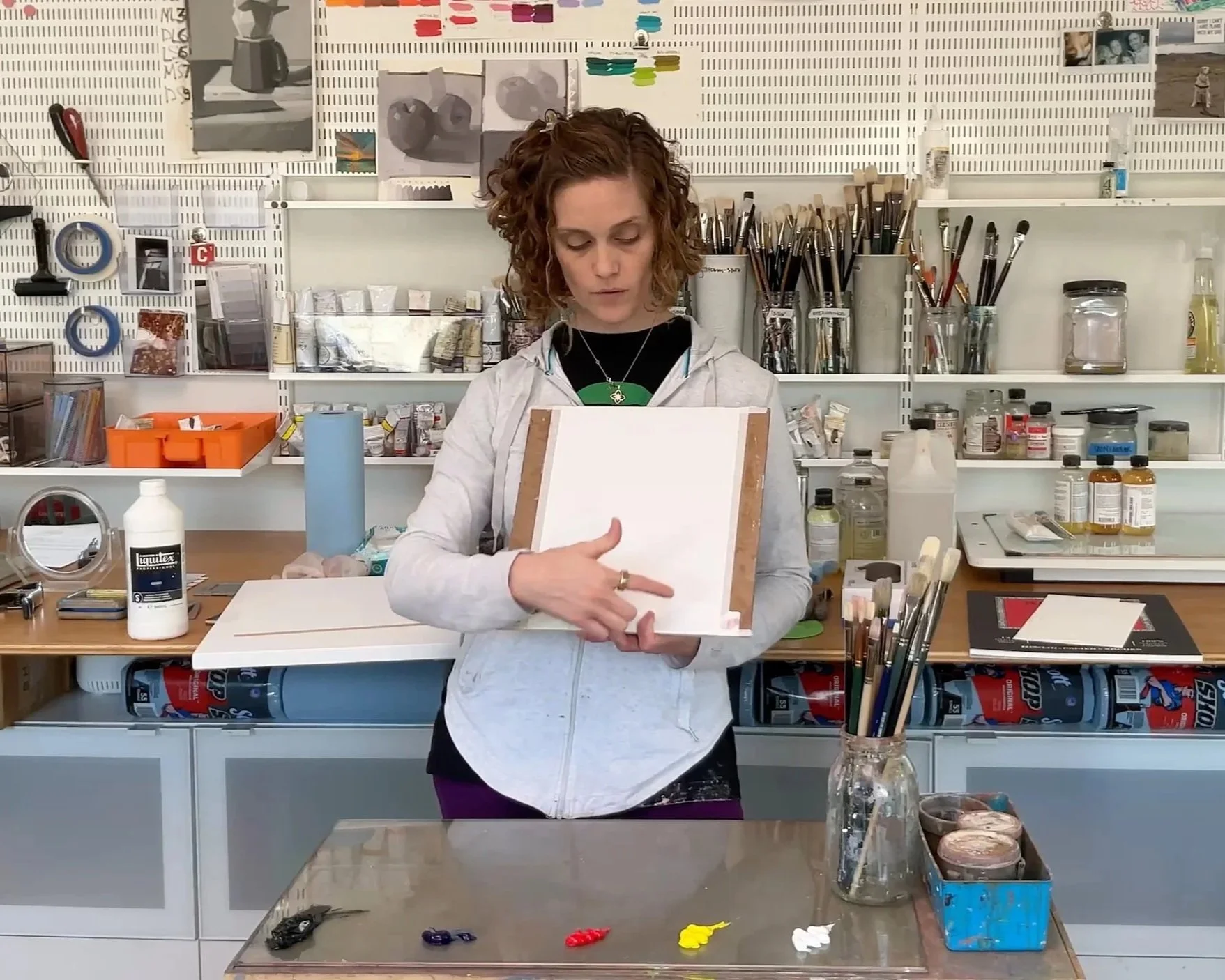
Tape the canvas sheet to a rigid board (or any hard, flat surface — even a piece of plywood) with white craft tape. The panel sits on the easel; the canvas sits on the panel. I use [12x12 MDF panels from Amazon].
Palettes
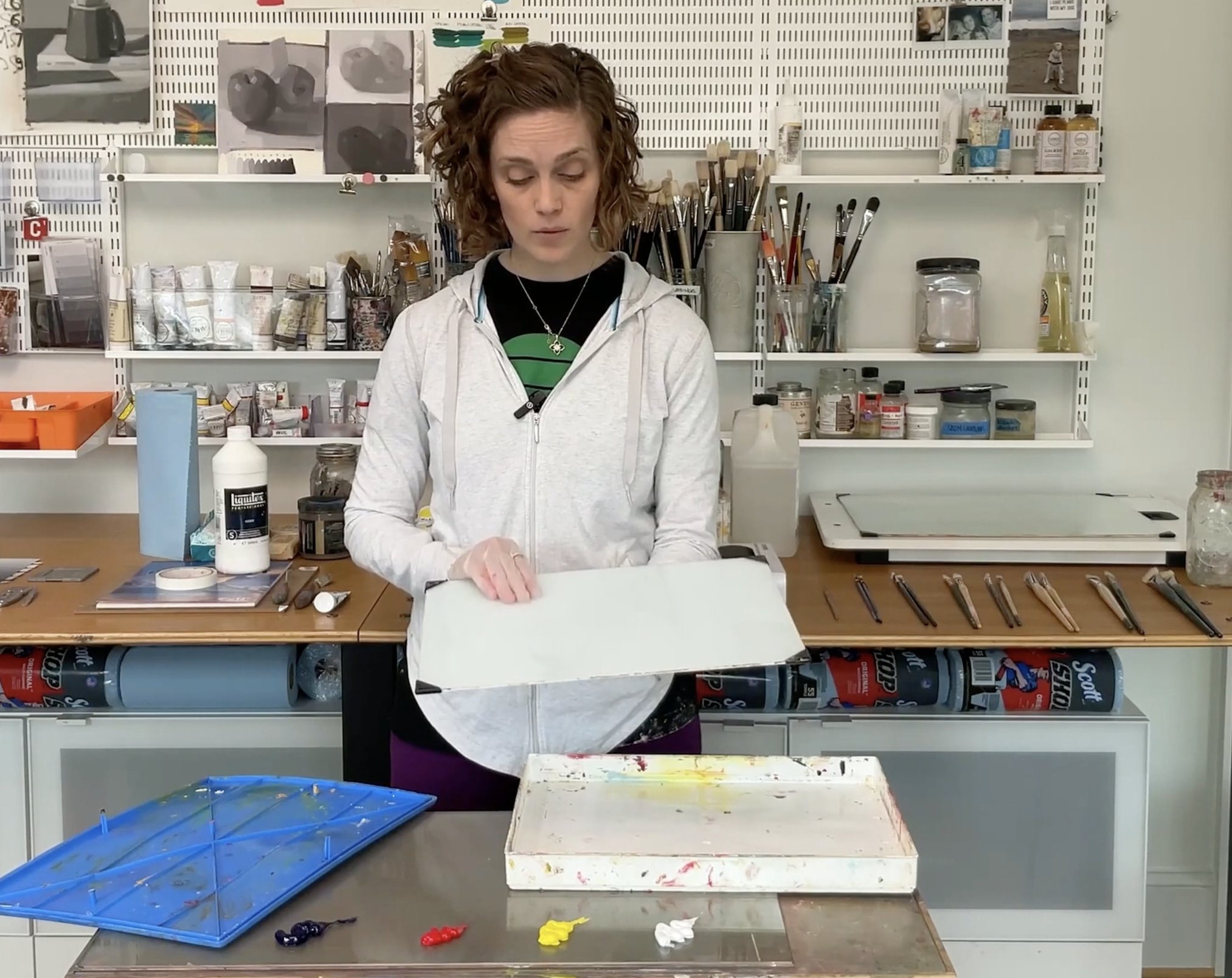
In this video, I cover the palette I use and how to keep your paint fresh between sessions.
About Palettes
There are several kinds of painting palettes: disposable paper palettes, wooden palettes, and glass palettes. Most come in white or gray. Glass palettes are great for beginners because they’re really easy to mix on and help you see your values and colors clearly. Both white and gray are good options, but if you are unsure, go with white!
If you want to get a custom cut piece of glass for your palette, One Day Glass is where I purchased mine — get the basic rectangle in your custom size, 1/4” thick, clear, and with a beveled edge (for safety). Then you can place it on a white or neutral gray table top. I painted my tabletop with [neutral gray 5 acrylic paint].
Keeping Your Paint Fresh Between Sessions
A Masterson palette box is a must-have! You can put your unused paint inside and seal it to keep the paint fresh longer. If you add a cotton ball soaked in [clove oil] inside OR store it in the freezer — or both — your paint just might say fresh for months!
Cleaning Supplies
In this video, I show you how I clean my brushes during and after painting so they last.
Cleaning Brushes While Painting
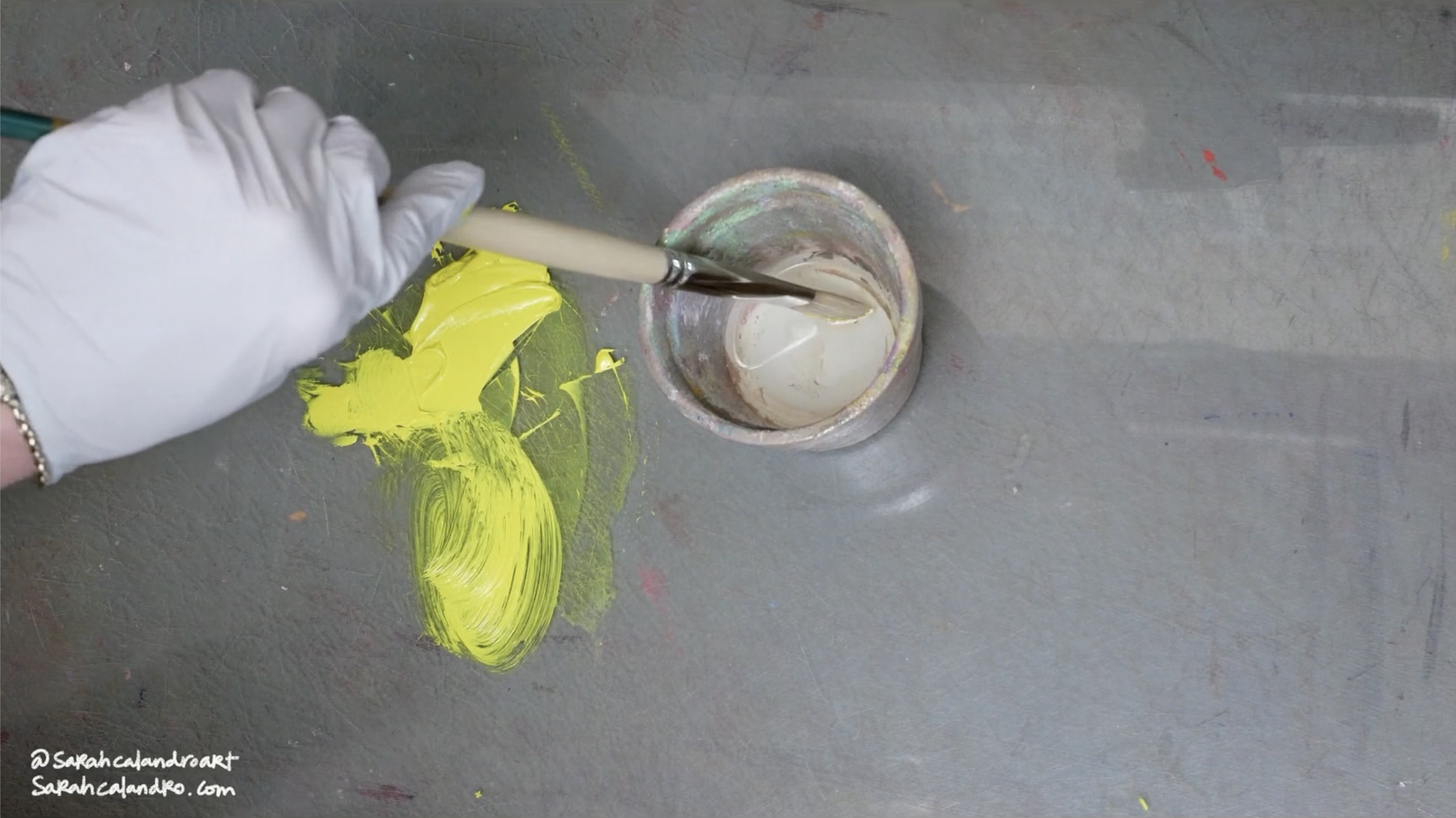
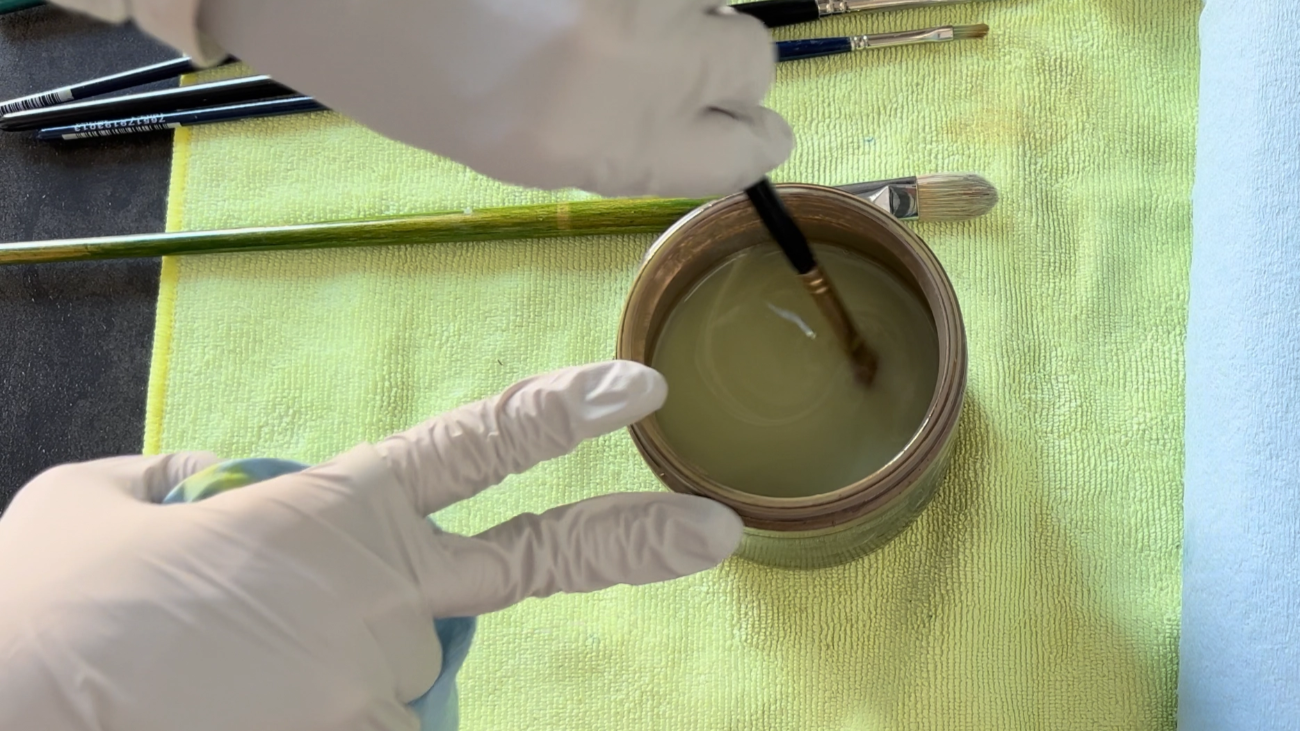
During painting, you'll use paper towels to wipe excess paint from your brushes between brush strokes, and you'll use a solvent in a brush-cleaning jar (like Gamsol) to periodically clean the paint from them entirely.
If you're familiar with any water-based paints (like acrylic, or watercolor), think of your solvent container as a replacement for your water cup.
NEVER, EVER use water when painting with oil.
Cleaning Brushed After Painting
Use paper towels and your solvent to get most of the paint out of your brushes. From there, either store your brushes wrapped in foil in the freezer (easiest and best for your brushes) OR clean them out fully with soap and water.
I use Master's artist soap (the green soap) and Master's brush cleaner and conditioner. You can also use [Murphy’s Oil Soap] and some people even claim that Dawn works well in a pinch (though, I don’t want to recommend it if I haven’t tried it!)
Caution: If you leave unclean brushes out for too long, the paint can destroy them permanently. The freezer trick or cleaning with soap and water prevents this.
Studio Supplies
You need a place to stand or sit, an easel, tables for your palette and still life, and light sources for your easel and still life. None of this has to be fancy. Try to make do with items you already have, at least to start. The Design your Painting Space lesson will cover how to design and set up your painting space in greater detail.
Other Supplies
There are a few things that don't fit into a category but are worth having around.
The Value Card
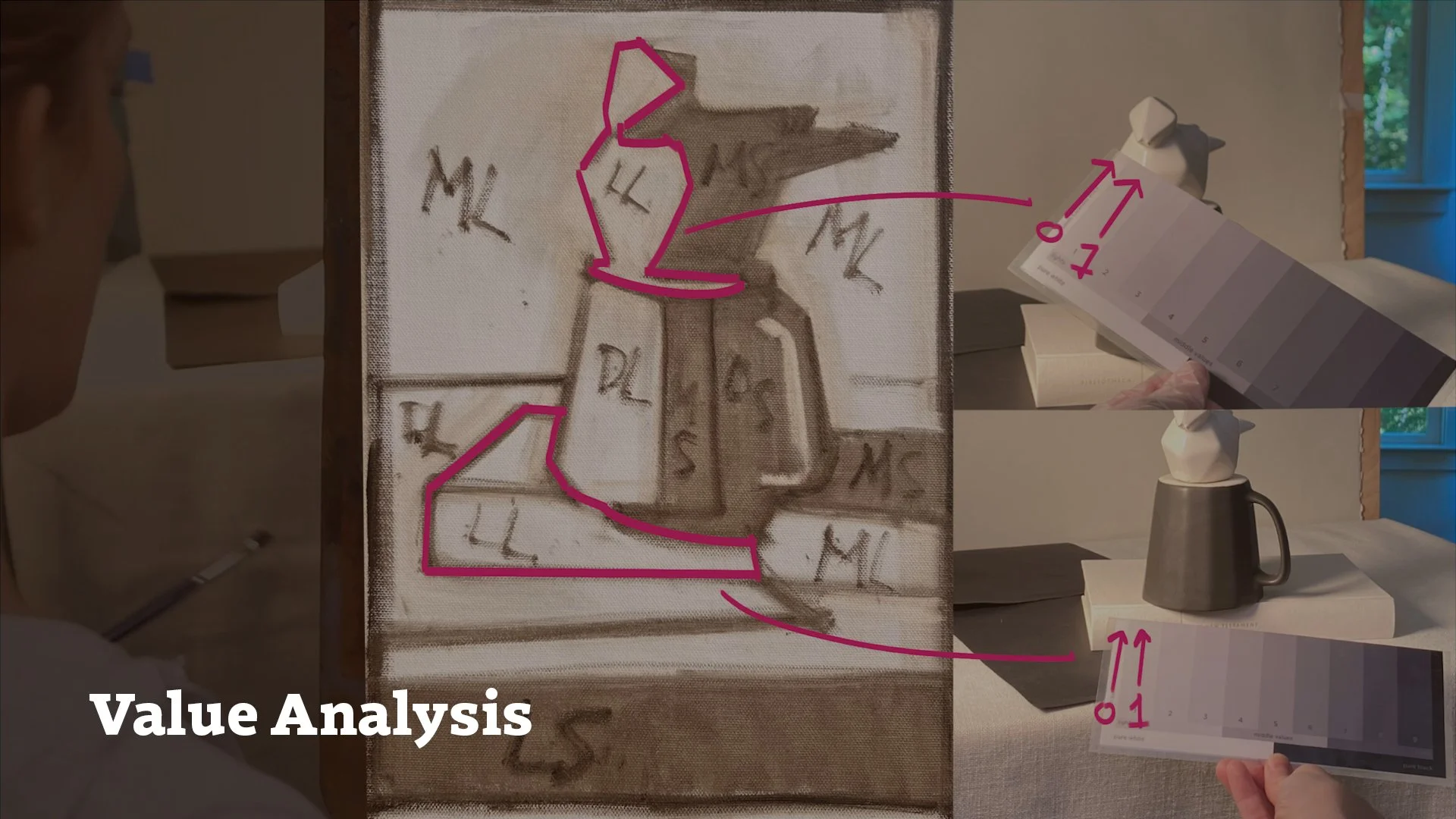
You'll need a way to assess the values of your subject and check the values of your paint as you mix them. There are several value scale products on the market, but the Value Card I've created is the only one I've seen of its kind — it lets you test your paint directly on the card, which is a pretty critical part of the way I teach values. You'll use it a lot in future lessons when we get into value work. You can purchase one on my website at the link below.
Whether you’re a beginner or experienced oil painter, the Value Card can help you improve your value skills. You can use it to identify the values you’re seeing in life and assess the value of your mixed paint. Because it’s laminated, you can put paint directly on it and it will wipe off! It consists of 11 values total, ranging from pure white as 0 (or 0% black) to pure black as 10 (or 100% black) and all 9 steps in-between. Learn more here.
Included is a video demonstration of how I use the value card along with a lesson on practicing values. It will cover my approach to underpainting, mixing black and white paint, and painting alla prima while focusing on big shape relationships.
Dimensions: 8.5x3.5 inches.
Materials: Inkjet printed on matte paper and laminated.
A Mirror
Looking at your painting through a mirror is very useful for seeing your work fresh. It helps you identify errors and see your painting from far away. Hold the mirror up or mount it to a wall behind you and then look at your painting through it.
A Tube Wringer
Paint is expensive! A [tube wringer] helps you squeeze every drop of paint out.